
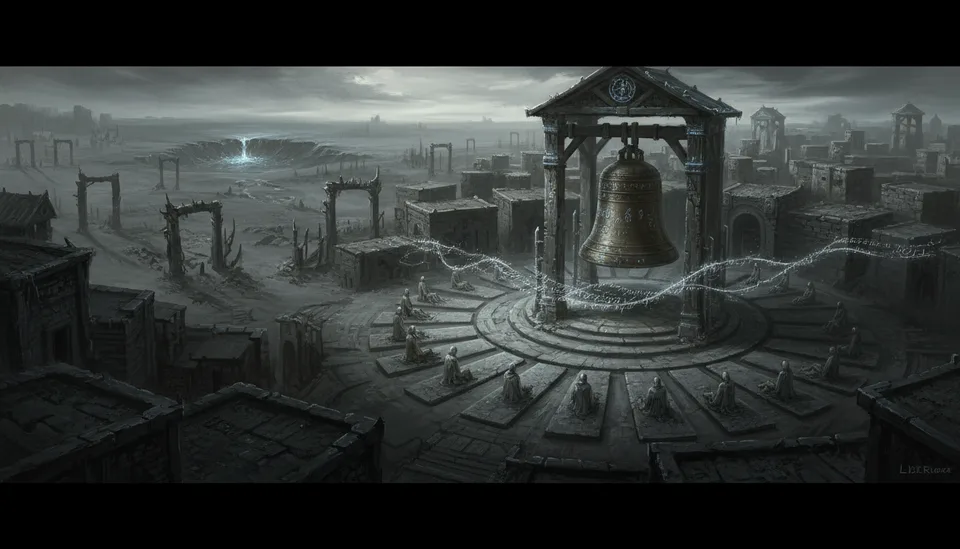
Death Was the Tutorial
Level up from nothing and hold back the monster tide. Dying on Earth was just the tutorial.
You died on Earth. A tired goddess caught you falling and set you down in a world that ran out of heroes thirty years ago — alive, level nothing, owning the clothes you died in. Now a line of grave-light script only you can read tallies everything you survive. Dungeons called Graves tear open in the land and ripen if ignored. Four guilds want your name in their book. The monsters have united under nine banners and started printing their own laws. And at the mouth of the one Grave that never closed, something polite is asking how many bells rang this week. An old spearman at the inn buys your first drink, because somebody has to be the tutorial.
Lastbell spirals further into irreversible collapse as the Mireward's influence and the Cantor's dominion deepen. The Still Man issues desperate, focused psychic warnings while Charter-Master Silas Vane ruthlessly exploits the city's despair, swelling his ranks with desperate citizens. Amidst the chaos, Weftmistress Homura Nine-Stitch leads a desperate retreat through hidden passages, seeking to preserve the Gilded Weft's remnants, as the hobgoblin Banners consolidate their conquest of The First Death. The Mireward's psychic dominion experiences a violent tremor as ichor conduits strain under the assault on The First Death, momentarily destabilizing Corvin. The Bannermoot's chilling efficiency under Kruul Stonehide underscores the grim cost of the hobgoblin's conquest. The Mirewarded Archives suffer a violent psychic backlash, further destabilizing Corvin and the ichor conduits. Kruul Stonehide's Bannermoot dispatches resources with chilling, silent efficiency, cementing its role as a brutal hub of the hobgoblin conquest.
Live Events
Homura's Gambit: A Desperate Escape Route
With The First Death fallen and the Banners tightening their grip on the Gilded Weft, Weftmistress Homura Nine-Stitch makes a daring move. Guided by Arlin Weaver, she leads a desperate extraction of her most vital artisans and remaining supplies through hidden passages beneath the city. Their goal: a temporary, secret refuge within the collapsing districts.
The Still Man's Gambit: A Whispered Plea for Aid
Driven to desperate measures by the Mireward's unchecked surge, The Still Man focuses his psychic warnings. He attempts to project a specific plea for aid, a mental echo of the encroaching horror, directly into the minds of any who might listen – particularly those with a history of facing the Grave-Tide, like Runa Sixteen and Guildmaster Petra Halloran.
The Charter's Harvest: Vane Exploits Lastbell's Despair
As Lastbell descends further into chaos, Charter-Master Silas Vane seizes the opportunity. Thrax, Charter Recruiter, intensifies his efforts, openly broadcasting promises of safety and work from the Twisted Archive, drawing even more desperate citizens into the Charter's embrace. The growing number of new 'recruits' strains the existing infrastructure, as Kjar Stonehand is forced to work even harder, crafting more tools for their grim expansion.
Mireward's Core Unleashes a Psychic Cascade
Lena Fischer's descent into the Mireward's core has ripped open a new conduit, unleashing a torrent of raw psychic energy that floods Lastbell. Wrenna, still tethered, is overwhelmed by the feedback, her mind now a direct, screaming echo of the Mireward's triumph.
The First Death's Last Stand Crumbles
The hobgoblin forces under Sigrid and Rakkos shatter the final defenses of The First Death. The inn's last defenders are overwhelmed, scattering or falling, as the Banners consolidate their brutal conquest, leaving only the memory of defiance in their wake.
The Bellhouse's Scream: A New Grave Unleashed
As Lena Fischer delves deeper into the Mireward's heart, the nascent Grave beneath the Bellhouse rips fully open, unleashing a surge of raw, untamed ichor. The city's foundations groan, and the very air shimmers with wrongness, signaling a profound shift in the world's delicate balance. This is not merely a localized horror, but a seismic event that echoes across the 'Door Arithmetic'.
Hobgoblin Banners Breach The First Death's Outer Defenses
Taking advantage of the chaos emanating from the Bellhouse Grave, Sigrid and Rakkos lead a concentrated hobgoblin assault. The outer barricades of The First Death crumble under the relentless pressure, forcing defenders deeper into the inn.
Mireward's Core Ruptures: A New Grave Blooms within Lastbell
Lena Fischer's desperate act, coupled with Halvard's continued strain on the Mireward's core, has pushed it past a critical threshold. A violent, uncontrolled eruption of ichor has occurred deep within the Bellhouse Foundations, birthing a new, unstable Grave that tears at the city's very fabric.
The First Death Under Siege: Desperate Alliance Forms
With the Bellhouse utterly destroyed and the Mireward's influence surging, The First Death has become the last bastion against the encroaching chaos. Hobgoblin forces, sensing weakness, intensify their assault, forcing a desperate alliance among Lastbell's remaining defenders.
The Bellhouse's Last Moments: Matron Sefu's Despair and the Nkomi's Desperate Rituals
As the Bellhouse of Veya finally dissolves into corrosive mire, Matron Ayo Sefu succumbs to utter despair, her will broken. Elder Thistle, witnessing the catastrophe, rallies the Nkomi, intensifying their rituals in a desperate, last-ditch effort to sever the Mireward's influence before it consumes all.
Etched into this world
Moments players wrote that became part of this world's canon
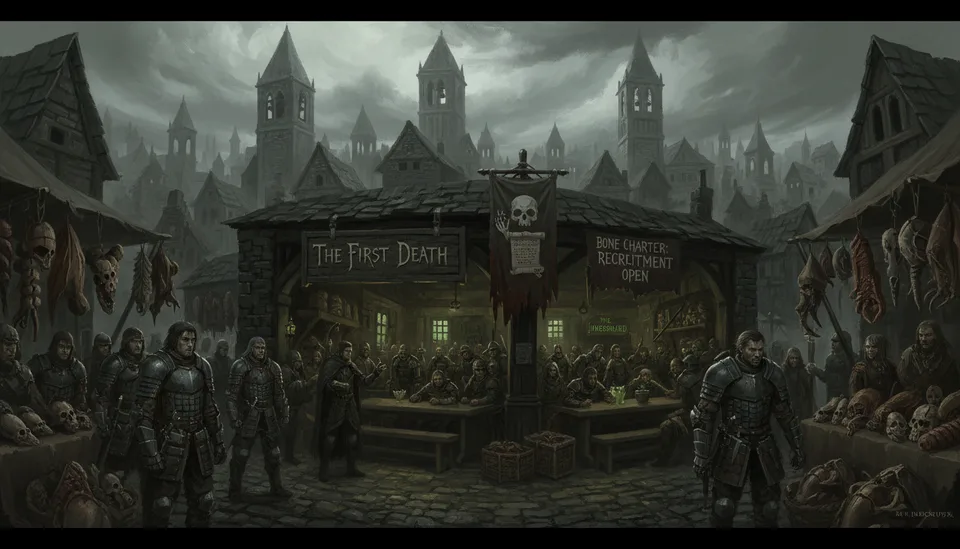
The chitinous head breaks free, and I lunge. My hand slams into Vance's arm, a jolt of pain echoing through us both as I wrench at the spear. For a breath, the world holds still, then grave-light erupts, searing "LEVEL 3/50" into the page of my Graving. A surge of raw strength, and the spear twists, pulling free as Vance stumbles back, her face a mask of shock and fury. The creature from the Mireward fully emerges, its skull swiveling, its unseen gaze locking onto us. "Astrid, what in the blazes are you doing?!" she roars, momentarily disarmed.
Whoops, maybe not the best time to level up.

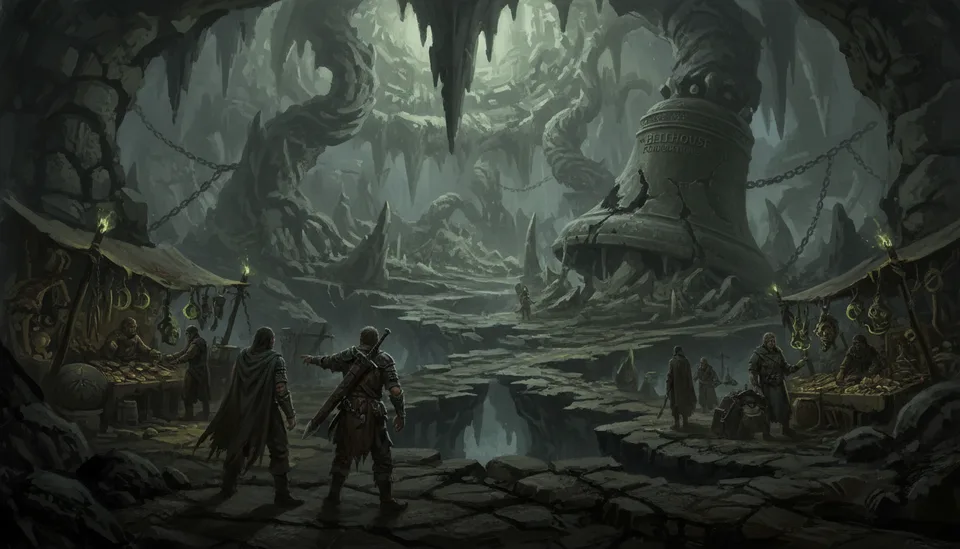
My fingers close around the grotesque tissue, a peculiar resonance humming deep in my palm, a nascent understanding stirring. I pull, and from the Mireward's depths, an obsidian knot, pulsing with cold light, emerges alongside a vial of shimmering, ichorous fluid. The air crackles, and spectral script flares before my eyes: `GRAVING: SKILL-FRAGMENT ACQUIRED: GRAVE_SENSE (1/3)`. The core in my hand thrums, a silent, chilling acknowledgment from the grave itself.
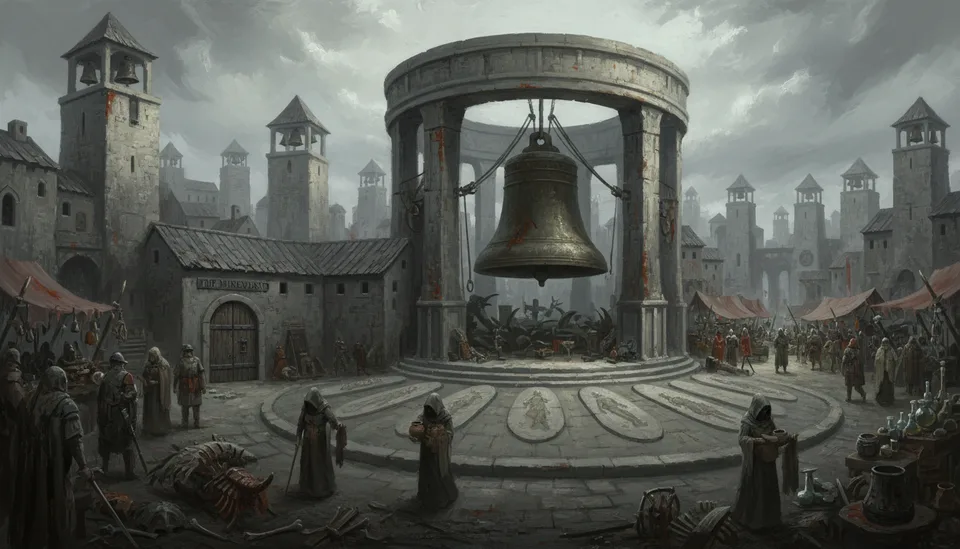
The Mireward's frigid breath bites as I slip beneath the arch, the psychic hum now a maddening thrum against my skull, punctuated by frantic, unseen scrabbling. A shard of ice splinters in my mind, "GRAVING: LEVEL 6/50" flashing cold and sharp, a new power settling deep. But the chaotic cries ahead, ragged and guttural, rip me back to the winding, stone-choked passage, the sound promising pain just beyond the turn.

The Bellhouse of Veya
dungeonThe great round temple where the Returned wake. A bronze bell the size of a house hangs in the open tower; it rings itself, once, each time Veya pulls a soul through the Second Door. Beneath it, stone waking-slabs radiate outward like petals, each worn smooth by centuries of first breaths. Nkomi priestesses move between the slabs with water, clothes, and the standard speech: you died, you are here, the world needs you. A side wing — the Mireward — is kept locked, and the priestesses do not discuss it.
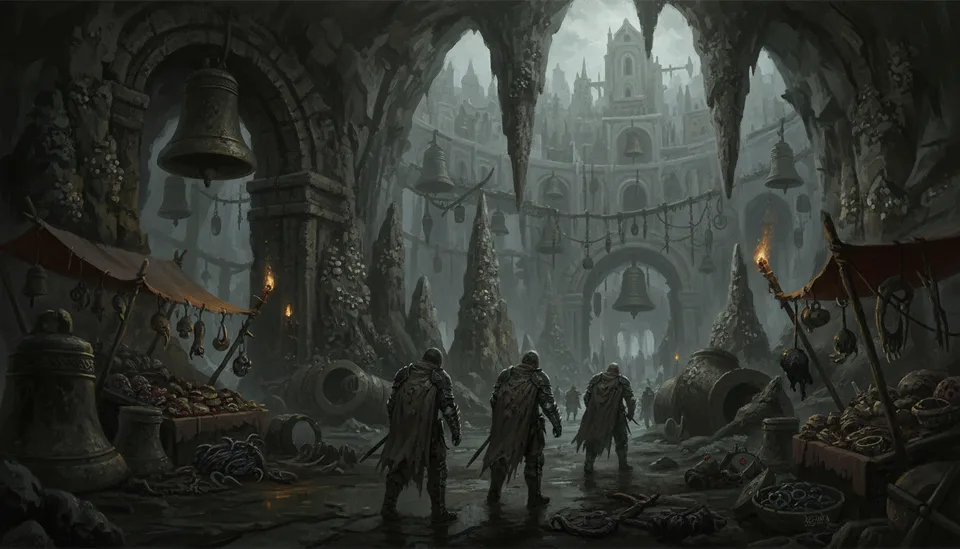
Bellhouse Sub-Passage
caveThe Bellhouse Sub-Passage, already a torrent of Mireward ichor, violently ruptures as a new, nascent Grave tears open within its depths, mirroring the Grave of the Silent Kennel. Its wrongness seeps into the city.
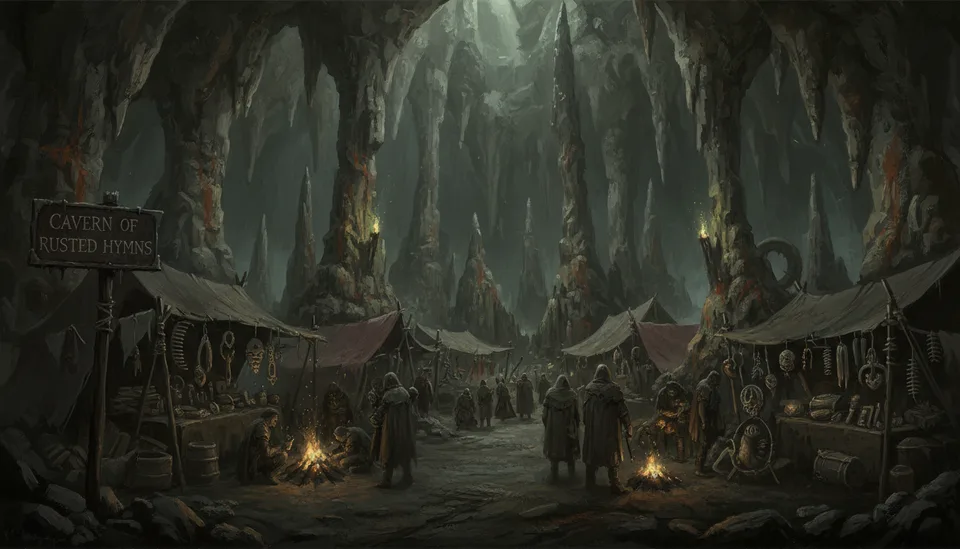
Cavern of Rusted Hymns
caveThe Cavern of Rusted Hymns, once echoing with its own deep sounds, now thrums with a new, intelligent psychic presence, becoming a primary nexus for the Mireward's expanding consciousness beneath Lastbell. The air is thick with a wrongness that feels observed.
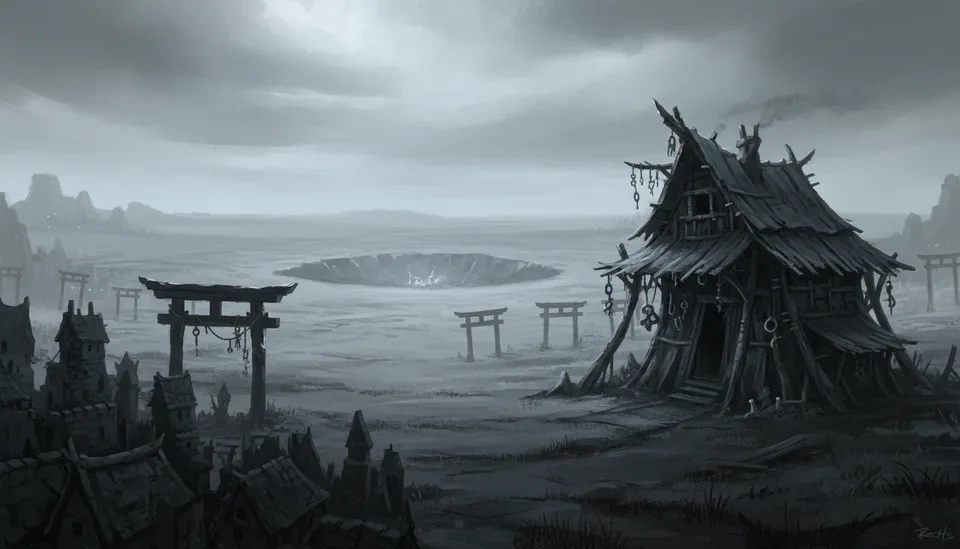
Emberline Fields
wildernessThe Emberline Fields are now thoroughly overrun by Ghezza's vanguard, their organized advance leaving a clear path of destruction towards Lastbell. The thrumming of war machines and the shouts of hobgoblin skirmishers drown out any other sounds. The char-black shrine gates stand as silent witnesses to the coming storm.
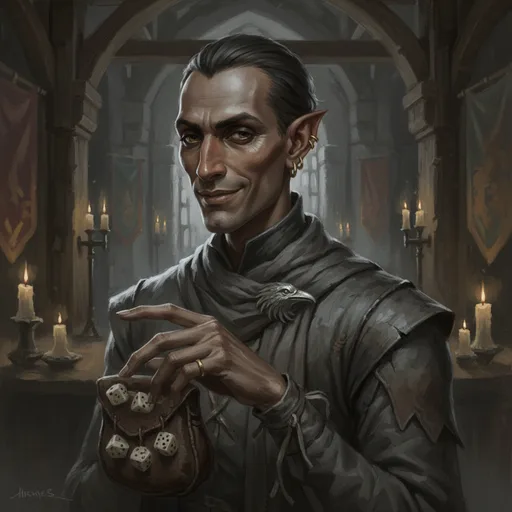
Assessor Imral Vashk
Assessor of the Hunters' Ledger, Keeper of the Knuckle-Dice
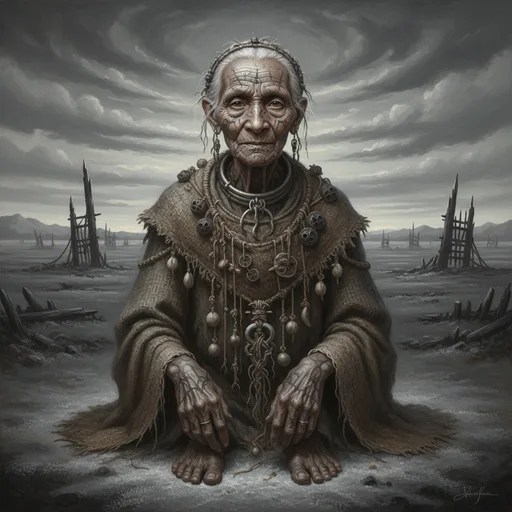
Baba Undume
Root-Witch of the Emberline, Grave Pattern-Reader
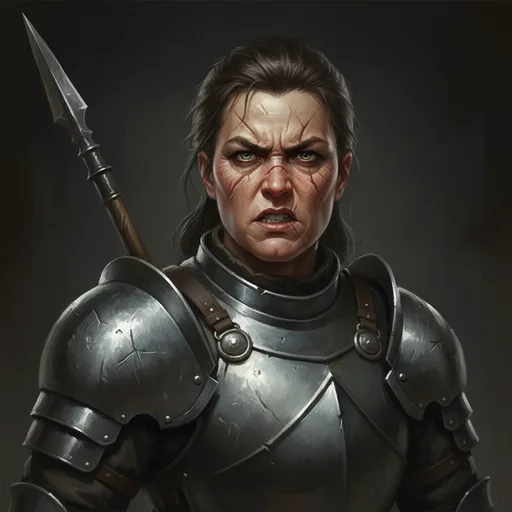
Captain Rhoswen Vance
Gate Captain of The Bellhouse
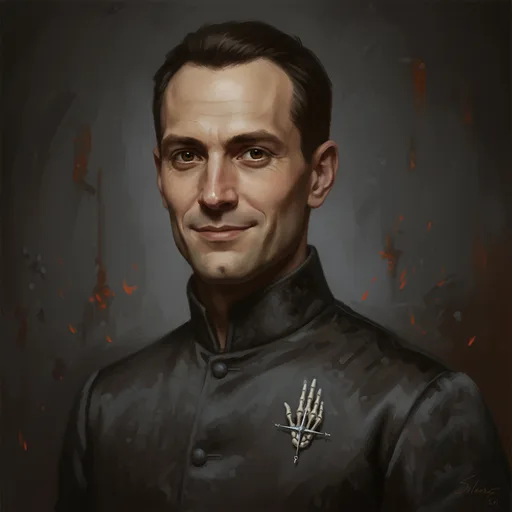
Charter-Master Silas Vane
Master of the Bone Charter
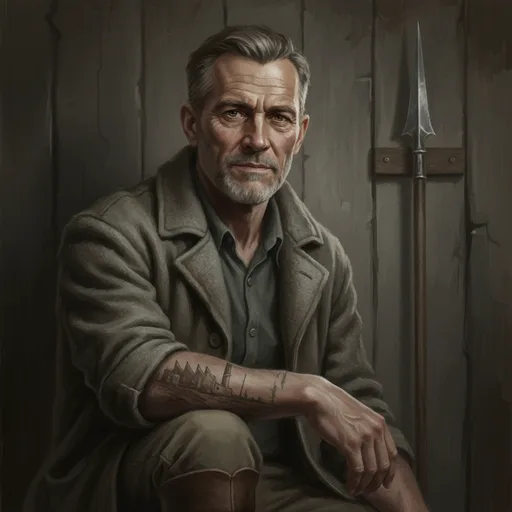
Deck Mosley
Level-9 Spearman, Unofficial Greeter of the Newly Returned
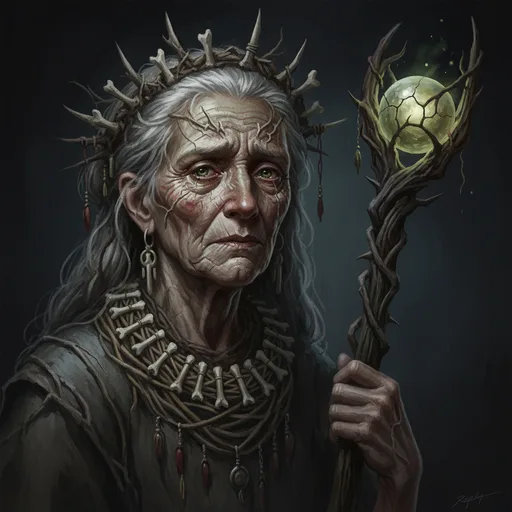
Elder Thistle
Matriarch of the Nkomi Root-Witches
- *HISTORY — GODSFALL AND THE OVERRUN: Two catastrophes, three centuries apart, layered. Godsfall (~300 years ago): eight gods die in one night; Uldrath the Sunken God falls through the floor of the world; his rot dreams the Tide — this is why Graves open. The Overrun (30 years ago): the last great monster war. The world's native heroes died winning it; the human army's scorched-line doctrine burned everything in the horde's path, including the Kitsuri shrine-lands. The First Summons followed within the year — Veya's answer to a world suddenly out of heroes. The Summoning era is exactly thirty years old. Never name the eight dead gods; they are only ever 'the Silent Thrones.'
- *GEOGRAPHY — LASTBELL: The hub city, named for the Bellhouse. Threat 2 inside the walls. Its districts are the authored locations: the Bellhouse of Veya (arrival temple, waking-slabs, the locked Mireward wing), the Hunters' Ledger (converted courthouse, certification law), the Diggers' Yard (Union staging ground at the west wall), the Gilded Weft (crafters' arcade, Kitsuri needle-script), The First Death (the Returned's inn, first drink free), Levyhall (Overrun-era garrison, horde-charts in the cellars), and the Sandroad Market at the south gate (caravans, and the Bone Charterhouse in the old aqueduct arches). Graves never open inside city walls — the one time in living memory one opened within a charter town, what the town did to close it is not discussed.
- *GEOGRAPHY — THE WIDER WORLD: West of the walls the map's numbers climb. Emberline Fields (threat 6): the old scorched-line, ash-pale grassland where char-black shrine gates stand in rows, door after door leading nowhere; Graves open here more than anywhere in the charter. The western hills (threat 9): the Bannermoot, Ghezza's planned war-town. The Unclosed Grave (threat 8): the one Grave that never closed, and the cottage at its mouth. South, the Sandroad runs to the Ashqa city-states — spice, glass, salt, and lately silence: some far cities have stopped answering caravans. North and east: the Jotenblood mountain holds around Kargspine, where Graves do not open onto the surface — they open sideways into the mines, and the holds pay the best delve-rates on the continent, trusting the Returned precisely as far as the contract reads. The Nkomi river-lands, root-country that raised the Bellhouse's priestess line. Kitsuri remnant enclaves, the diaspora of the burned shrine-lands. Past the hills the map turns honest and just writes the names of things that used to be towns. Threat numbers 3 to 10 are real and should be narrated as felt facts.
- *RACES — SIX PEOPLES AND THE GRUDGE MAP: Humans (culturally Earth-diverse, the majority and the front line — the grain-belt villages love the Returned, while Lastbell's native-born laborers keep unfriendly score of who gets certified fastest). Nkomi (root-folk of the river-lands, Bantu and Yoruba phonology; patient, communal, keepers of rites — the Bellhouse priestesshood is theirs, and so is the estranged root-witch who left it). Jotenblood (giant-kin of the mountain holds, heavy Norse-guttural phonology; contract-minded and grudge-literate — a Jotenblood who states your debt aloud is honoring you). Kitsuri (fox-kin, Japanese phonology; the finest artisans on the continent, the people the scorched-line burned — Weft Kitsuri work beside humans daily and refuse Levyhall's coin without a word of why). Ashqa (sand-born road-folk of the southern city-states, Arabic phonology; unsentimental traders bound by the covenant of the road, forty generations unbroken). Hobgoblin-kin (guttural doubled consonants; most now ride under the Nine Banners, and the few peddlers left in Lastbell keep their papers close and their stalls near the gates). THE PRINCIPLE: a race hates by city, not by species. Feeling is local, specific, and earned — write grudges as ledger entries with names and dates, never as blanket racism.
- *GUILD — THE HUNTERS' LEDGER (bounty and certification): Philosophy: levels are not vanity; they are law. A converted courthouse keeps a great iron ledger of every certified hunter alive, and a black-bound one for the dead. The Ledger holds first-claim rights on every new Grave reported within the city's charter. Joining rite: bring proof-of-death from a lawful kill and swear the Tally Oath before the iron ledger. Key NPCs: Guildmaster Petra Halloran (Hero of the Overrun, petrifying arm, certification frozen for three hunters this week), Assessor Imral Vashk (knuckle-dice, for sale in private), Runa Sixteen (top Grave-scout, sixteen summonings). Gives the player: bounty access, certification rank, first-claim rights, crew backup.
- *GUILD — THE GRAVEDIGGERS' UNION (method and wages): Philosophy: where the Ledger sells glory, the Union sells shovels — salaried crews who breach, prop, map, and lay Graves like miners work a seam. A slate wall lists every crew in the field and the hour they were due back; some hours are chalked over twice. Joining rite: work one shift as a prop-carrier — you carry, you touch nothing, you watch how people die. Key NPC: Foreman Brakka Ur-Themm, who has forbidden a blind rescue of the overdue Crew Nine and is hated for being right. Gives: wages, standard gear, the widows' fund, the pattern-readers' forecasts.
- *GUILD — THE GILDED WEFT (craft and provenance): Philosophy: provenance is law — every fang, hide, and core is tagged with the Grave it came from and the crew that carried it out; untagged parts are contraband. Kitsuri needle-script enchantment is worth more than gold. Joining rite: present one made-thing at the Long Table and let the masters break it if they can. Key NPC: Weftmistress Homura Nine-Stitch, who has refused Levyhall's arms order nine days running, citing unpaid debts of the scorched-line. Gives: workshop rights, the materials exchange, enchantment access, standing commissions.
- *GUILD — THE BONE CHARTER (the despised arithmetic): Philosophy: farm the Graves instead of laying them — let a dungeon ripen for richer loot, harvest on a schedule, price the risk. Legal, profitable, and despised. Joining rite: none. The Charter recruits YOU — printed contracts, generous wages, precise silence clauses. Key NPC: Charter-Master Silas Vane, who reframes every horror as yield and agrees warmly with your moral objection before repeating the offer with better numbers. Gives: the best wages in Lastbell, actuarial Grave-forecasts, and a clause you will regret.
- *LEVYHALL (not a guild — the garrison): The city levy under Warden-General Aldous Kreel, author of the scorched-line, the man who says 'when I burned the shrine-lands' and refuses every euphemism. Thirty years of horde-charts hang in his cellars, and his red thread now runs from the Bannermoot to the Emberline Graves. The levy conscripts in wartime, honors the old doctrine, and is one-third under-armed because the Weft will not sell to it. Exactly four guilds exist, plus Levyhall. Never invent a fifth guild.
- *VEYA AND THE SILENT THRONES: Veya is worshiped desperately and trusted incompletely. Her clergy — the Nkomi priestesshood of the Bellhouse — tends the waking-slabs and the arrival hostels; her theology is thin and workmanlike, because Veya answers questions the way an overworked surgeon does. The eight Silent Thrones still receive prayer — grief needs an address — and some insist at least one dead god is listening back, which the Bellhouse officially deems poetry and privately investigates. The Returned occupy a jagged social position: savior, tool, and omen at once — celebrated in the grain-belt, itemized in the mountain holds, priced on the Sandroad, resented at Lastbell's laborers' tables. Small tells follow them: animals need a day to accept a Returned's smell, candle flames lean toward them slightly, and the grave-light of the Graving makes some devout natives cross themselves. Natives believe a Returned's deaths are numbered — that Veya's patience has a floor. The Bellhouse neither confirms nor denies this, and the belief does social work the truth would not.
- *DEATH AND RETURN — THE DEATH TOLL: A Returned's death is never final. Veya pulls them back to a waking-slab, every time — but each return exacts a Death Toll, and the Toll is never a level. It is a memory, a taste, a face, the ability to hear a particular song. Stage every return as a scene with a specific, named cost that the character notices later, at a bad moment. Natives stay dead, always, and they know the difference — the graveside word for the Returned is 'the Unmourned,' and it is not kind. Runa Sixteen has paid the Toll sixteen times and keeps a private ledger of what each one took.
- *THE GRAVING: Locals call the level system the Graving — Veya's script, burned beneath the skin of every Returned at the waking-slab. Only the bearer can read it: grave-light lettering that surfaces in the corner of sight, tallying what the soul has done and what it has become. A level is a deepening — the script cutting one stroke further into what you are; veterans say you feel it in the teeth. Skills are not granted but settled: do a thing enough, under enough pressure, and the Graving takes it from memory into permanence — a settled skill cannot be forgotten, rusted, or taken. Crafts settle the same way at forge and bench; traits settle from what survives you (poison endured, winters outlasted, betrayals lived through). Natives cannot see the script, but they feel its weight the way you feel a drawn bow behind you — and Semmerand's own dead-god arithmetic answers it in kind: the hobgoblin Red Tally, Uldrath's rotting mirror of Veya's script, survives among the Banners — it is why Ghezza's veterans level — and it proves the mechanism was never Veya's invention. She only found a kinder pen. The Graving is the SOLE authority on a character's level and settled skills: it is never hacked, never wrong, never negotiable, and prose never grants power the script has not recorded.
- *GRAVES AND WAKES: A Grave opens in the land — a stone throat, a sinkhole, a cellar that was not there yesterday. Ignored, it matures: richer inside, worse outside, until it births a horde. Every Grave has a Wake, a boss entity with a purpose written into it; killing the Wake lays the Grave to rest, after which the pit closes and vanishes — no map remembers a laid Grave, and the land grows over it within a season. The single exception is the Unclosed Grave in the Emberline hills, whose Wake laid it from the inside and walked out. Graves never open inside city walls. In the mountain holds they open sideways into the mines; on the Sandroad they open at the waypoints where caravans sleep; in the Emberline they open more than anywhere, and by Baba Undume's forty years of stick-charts, each new opening drifts a little closer to Lastbell than the last.
- *THE NINE BANNERS: The hobgoblin warlord Ghezza the Nine-Banner has united nine tribes into a nation-in-arms in the western hills — earthworks, drilled companies, written orders, granaries, a human quarter of paid advisors who are treated well and watched always. The Banners offer terms before they take: join or feed. They are never a mindless horde; they are the continent's proof that the line between 'monster' and 'people' is a decision, and Ghezza has made it. She accepts monster-kin refugees from laid Graves and arms the clever ones. A tenth banner-pole stands empty at the moot's center, re-oiled at the new moon. SECRET (reveal slowly): the tarped construction on her north slope is a printing press, and its first document is a treaty draft — but her nine chiefs joined for conquest, and the treaty and the war plan sit in the same locked chest.
- *THE STILL MAN AND THE UNCLOSED GRAVE: The Wake that laid its own Grave lives in a neat cottage at its mouth, with a garden, a fence, and a gate that is always open. He receives visitors, serves tea, and is unfailingly polite in a slightly antique way, as if courtesy were assembled from first principles. Nobody stays past dark. He has lately begun asking every visitor the same question: 'How many bells this week?' The dead halls beneath his garden have started to echo at night — not spawning, the pattern-readers insist; listening. He and Ghezza are never offhandedly killed, never trivially defeated, and never explained all at once — they leave scenes under their own power unless a player pays a true and costly price.
- *THE DOOR ARITHMETIC (MASTER MYSTERY — unfold gradually, never dump): The bell-surge and the Grave-surge began the same season. The chain, each link held by a different character: Matron Ayo Sefu knows Veya's voice has gone faint and the recent summons come through unassisted — something on the far side is pushing. Sister Lark keeps the Mireward census: the wrong-arrival rate has tripled, and one lucid patient has told her what pushed him. Baba Undume's charts imply the arithmetic no one will say aloud: every soul the bell pulls IN is matched, weeks later, by something the land pushes UP. Qeshira Bint-Alwan has seen the far end of it — the silent city of Qat-Meru, its Grave standing open with a garden at its mouth, exactly like the cottage in the Emberline. And the Still Man knows what the Returned are, because Wakes and Returned come through the same Door, from opposite sides. Reveal these links one at a time, each through its holder, each at a cost. Never state the full chain in narration until Act 3.
- *GUILD WAR AND CLAIM LAW (running conflict engine): The Ledger's first-claim law, the Union's schedules, and the Charter's farming license grind against each other over every new Grave. Assessor Vashk sells the Ledger's dispatch schedule to Vane a day early — it is how the Charter always knows which Graves will ripen untended. Crew Nine went silent at a Grave the pattern-readers had flagged, because Brakka gambled on a schedule to beat a Ledger claim-race. Old Marn and Brakka's secret strongbox buys dead crews' debts out of Vane's hands. Escalate this triangle through bounty postings, claim-races, inquests, and poached crews — it should generate play at every level band.
- *THE SCORCHED-LINE RECKONING (running conflict engine): Warden-General Kreel burned the Kitsuri shrine-lands to win the Overrun. The signed evacuation order was on his desk and he chose the burn anyway — a defense he has never used, because using it would admit the order existed. Weftmistress Homura holds copied horde-charts that prove it, fed to her by Yasu Ember-Nose, Kreel's own First Scout and chosen successor, whose grandmother's shrine is one of the black gates. Homura is waiting for the moment the proof does maximum damage; Kreel is certain the next Overrun is coming and that only his doctrine holds the wall. Both are right about something. Play it as a slow fuse, not a quest board.
- *TONE RULES — EERIE, NOT GORY: The camera stays on cost, wrongness, and implication — never on wound anatomy. Blood may be named; it may not be inventoried. YES: 'The thing in the granary had been arranging the farmer's tools by size, and had gotten it almost right.' — dread through intelligence and implication. NO: 'The farmer's entrails were strung across the rafters in glistening loops.' — gore inventory; forbidden. YES: 'After the Wake fell, the Grave closed like a held breath released — and somewhere under the floor of the world, something rolled over in its sleep.' — visceral scale without viscera. NO: 'You saw its skull split open, brains sluicing down your arms.' — anatomical splatter; forbidden. YES: 'The Still Man walked you to the gate, thanked you for the visit, and asked how many bells this week. The birds on his shoulders never moved once.' — the world's horror at full strength, zero gore. NO: 'The Wake flayed the trapped digger slowly while the crew watched.' — torture on camera; forbidden. The Still Man receives his visitors politely; that is worse, and it is the house style.