
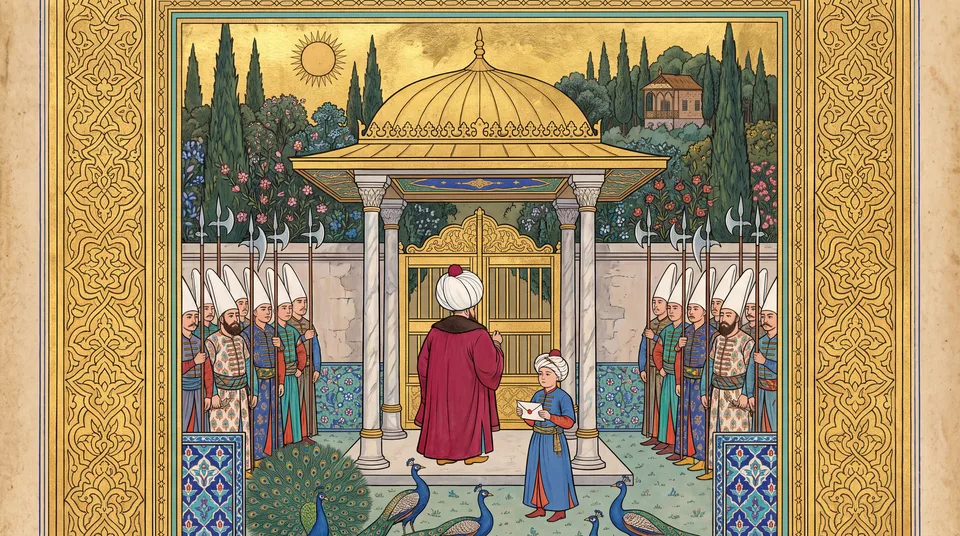
Tahtın Gölgesi: Shadow of the Throne
The Sultan has vanished and every pasha keeps a book of favors and grudges. Get on the right page — and choose the next sultan.
The Old Lion has not been seen in fourteen months. Sultan Alaeddin Aslanoglu hunts at Edirne, they say, while his Grand Vizier holds the seal, his mother holds the palace, his three sons hold three provinces, and the janissaries hold their empty pay-purses. You are a prince of the blood, a servant of the Gate, a lady of the Old Palace, or a foreigner with a letter you should not have — and in this court nothing is ever forgotten, because every pasha, aga and hatun keeps a defter: a written register of who served them and who wronged them. What another player did to the Grand Vizier last week is waiting for you in his eyes today. Collect leverage. Bind the houses with seals. Watch the Cord.
Rukiye Efendi's audacious public assault on Grand Vizier Ferhad Pasha and Mercan Kethuda within the Divan has plunged the capital into further chaos. The Grand Vizier is humiliated and wounded, Mercan Kethuda's alliance is shattered, and Gevher Sultan sees new opportunities. Kirkor Usta remains silent, using the upheaval to strengthen the Bedesten's autonomy. Whispers of diverted silk and the Sultan's ongoing absence are now amplified, fueling dangerous speculation and accelerating the schemes of Prince Korkut and Nevbahar Kadin, further destabilizing the court. The Bedesten formally adopts a defiant new charter, openly challenging imperial trade authority and solidifying its autonomous status under Kirkor Usta's leadership. The Bedesten's new autonomous council convenes for the first time, addressing immediate trade route disputes and solidifying its defiance against imperial authority. The Bedesten's council issues its first decree, openly challenging imperial trade authority by asserting its right to levy tariffs, further solidifying its autonomous status. A court Page meticulously dispatches news of the Bedesten's defiant decree, ensuring the capital's factions are fully apprised of the market's challenge to imperial authority. Kirkor Usta's calculated leak through a court Page ensures the Bedesten's defiance is framed to provoke a specific, strategic response from the imperial court, further escalating the political tension. A court Page, armed with strategically framed intelligence from Kasım, prepares to escalate the Bedesten's defiance into a direct challenge against the Sultan's personal authority. Kirkor Usta subtly reinforces the Bedesten Bostanci's loyalty, further insulating the autonomous market from imperial influence. Kirkor Usta orchestrates a subtle exchange between the court Page and Hakim, ensuring the Bedesten's defiant narrative continues to spread strategically through the capital. The Bedesten's defiance, now carefully articulated by Hakim and disseminated by the Page, begins to ripple through the capital, expertly framed to provoke a specific, strategic imperial response. Kirkor Usta consolidates the Bedesten's council, ensuring internal […] ating a calculated internal 'leak' to mislead the imperial court about its true vulnerabilities. Within the Bedesten, Leyla and Attar detect the first subtle signs of the imperial court's reaction to their orchestrated 'leak', confirming their psychological warfare is on track to provoke a miscalculated response. Within the Bedesten, Leyla, Attar, and the loyal Bostanci refine their psychological warfare, preparing a new, veiled provocation against the imperial court. The Bedesten's leadership, interpreting the court's silence as a strategic pause, escalates its psychological warfare with a new, carefully crafted provocation. The Bedesten escalates its psychological warfare, feeding the imperial court a calculated 'confession' designed to provoke a strategic misstep. The Bedesten dispatches its calculated 'confession' through a 'defected' guard, escalating its psychological warfare against the imperial court. Kasım, observing the court's strategic silence, re-calibrates his own intricate plans within the ongoing psychological conflict. Within the Bedesten, Leyla and Attar's silent exchange affirms their intricate psychological warfare, ensuring their calculated 'confession' is poised to provoke the imperial court. The Bedesten's leadership settles into a period of watchful waiting, having dispatched its calculated 'confession' and now anticipating the imperial court's reaction. The Bedesten's leadership interprets the imperial court's silence as a calculated move, confirming their psychological warfare is on track and bracing for the next phase of their intricate deception. Nevbahar Kadin and Sadik strategically disseminate the Bedesten's 'confession,' amplifying its damaging implications through controlled leaks.
Live Events
The Grand Vizier's Humiliation: An Unforgivable Affront
Rukiye Efendi's audacious attack on Ferhad Pasha and Mercan Kethuda within the Divan has sent shockwaves through the court. The Grand Vizier, publicly wounded and stripped of a symbol of authority, now faces unprecedented humiliation, while Mercan Kethuda's position is gravely compromised.
A Web of Rumors: The Silk and The Sultan's Absence
Rukiye Efendi's public accusation of diverted silk, combined with the attack on the Grand Vizier, ignites a fresh wave of whispers across the capital. The implications of corruption reaching the Sultan's coffers, coupled with the ongoing absence of the Old Lion, fuel dangerous speculation and further destabilize the already fragile court.
Ferhad Pasha Secures 메르잔 케투다's Allegiance
Following persistent overtures and witnessing the Valide's ruthless purge, 메르잔 케투다, Chief Steward of the Inner Court, accepts Ferhad Pasha's offer of alliance. This strategic pact shifts the balance of power, granting the Grand Vizier significant influence within the Inner Court while 메르잔 케투다 gains a powerful protector.
The Old Palace's Last Stand: Prince Cihan's Desperate Gambit
As the Janissary assault on the Old Palace escalates and agents scavenge its ruins, Prince Cihan, trapped within, makes a desperate move. Unaware of the shifting loyalties outside, he dispatches a final, secret message seeking aid, hoping to rally forgotten defenders or expose Gevher Sultan's true ruthlessness.
Gevher Sultan's Purge Deepens, Targets Loyalists to the Old Palace
Following the systematic scavenging of the Old Palace, Gevher Sultan's agents intensify their search for any who might still harbor loyalty to the former residents. The fear of implication spreads, causing many to abandon old allegiances and publicly denounce any connection to the dethroned consorts, as the Valide's grip tightens.
Galata's Economy Stabilizes Amidst Imperial Turmoil
Despite the unfolding chaos in the capital, Galata's merchants, buoyed by recent diplomatic maneuvers and the Bedesten's declaration of autonomy, experience a period of unexpected stability. Bartolomeo Zen leverages the information from Trabzon and the Sultan's secret to secure favorable trade terms for Venetian interests, subtly shifting economic power away from the Divan.
The Sultan's Secret Exposed: A Threat to Edirne
Word of the Sultan's long absence and the concealed truth about his condition begins to spread beyond the Inner Court, fueled by fragments of the intercepted secret. Musa Celebi, realizing his complicity, now faces imminent danger, while Bartolomeo Zen scrambles to control the flow of this explosive information, aware of the deeper implications for the House of Galata.
A Plea Unanswered: Prince Cihan Isolated
As the Janissary roar grows louder, Prince Cihan's desperate pleas for aid from within the Old Palace reach no sympathetic ears. The chaos engineered by Yusuf Aga and Prince Korkut's agents ensures that Cihan remains isolated, his fate seemingly sealed by the encroaching rebellion.
The Bedesten's Merchants Fortify Their Gains
Amidst the escalating chaos in the capital, Kirkor Usta, Hakim, and Leyla, emboldened by their recent victory, solidify the Bedesten's independence. They establish a formal council, issuing proclamations that declare the market a neutral zone and expand its self-governing authority, directly challenging the Divan's weakening grip.
Janissary Discontent Brews as Ulufe Terms are Revealed
The Barracks Scribe, having meticulously recorded Prince Yahya's oath, quietly disseminates the terms throughout the Ocak. While news of the impending ulufe payment brings a flicker of hope, the revelation that it will come from Trabzon's coffers fuels resentment against Prince Cihan and deepens the growing rifts within the Janissary corps, already under the sway of Yusuf Aga and Hasan Corbaci.

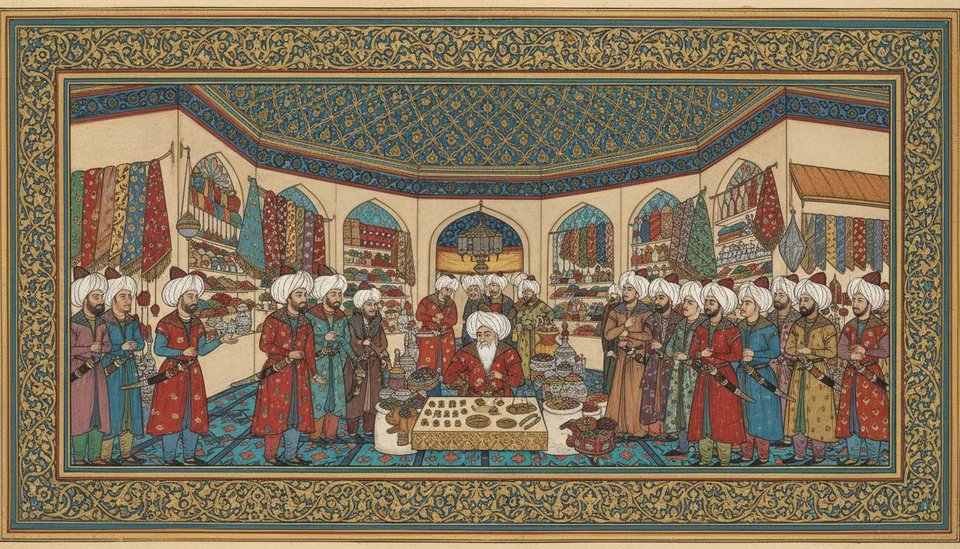
Bedesten
marketThe domed heart of the covered bazaar — silk, silver, spice, and the jeweler Kirkor Usta's stall where letters are weighed like gold. Neutral ground by long custom: blades stay sheathed and everything has a price.
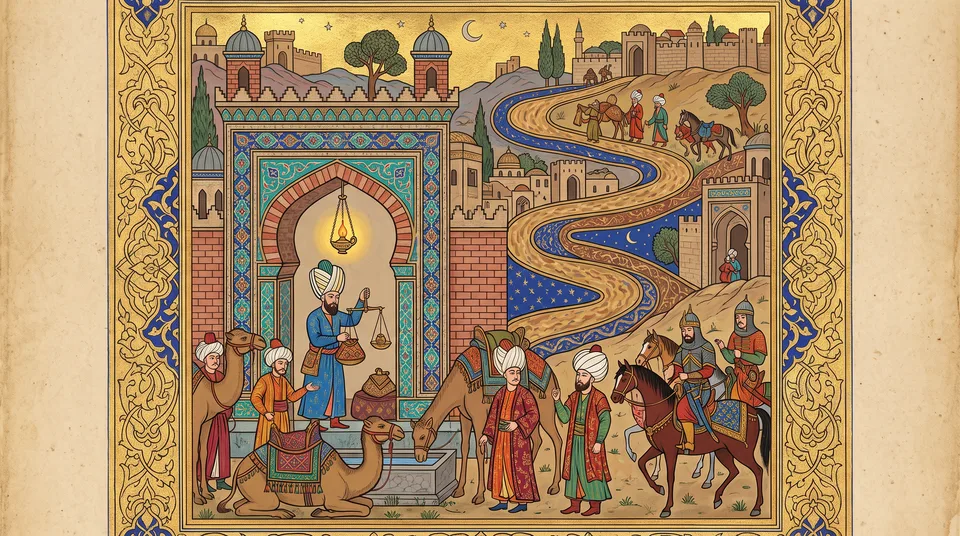
Anatolian Road
roadThe caravan road between the princes' seats: caravanserais, courier-stations, and stretches where letters are read by men who did not write them. Whoever holds the road holds the princes' correspondence.
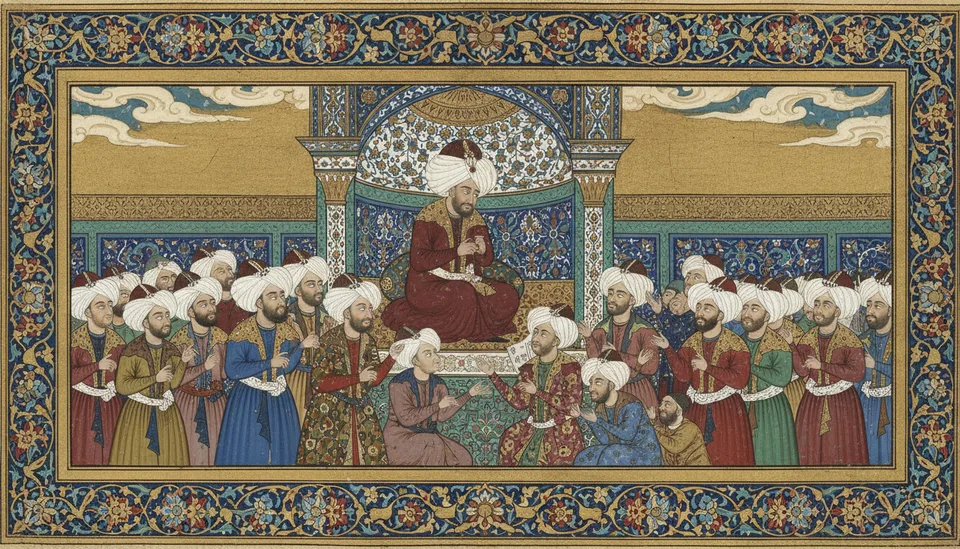
Council Dome of Whispers
landmarkThe Council Dome now serves as a symbol of Ferhad Pasha's diminished power, its pronouncements openly challenged, and its authority questioned by the populace and merchant guilds alike.
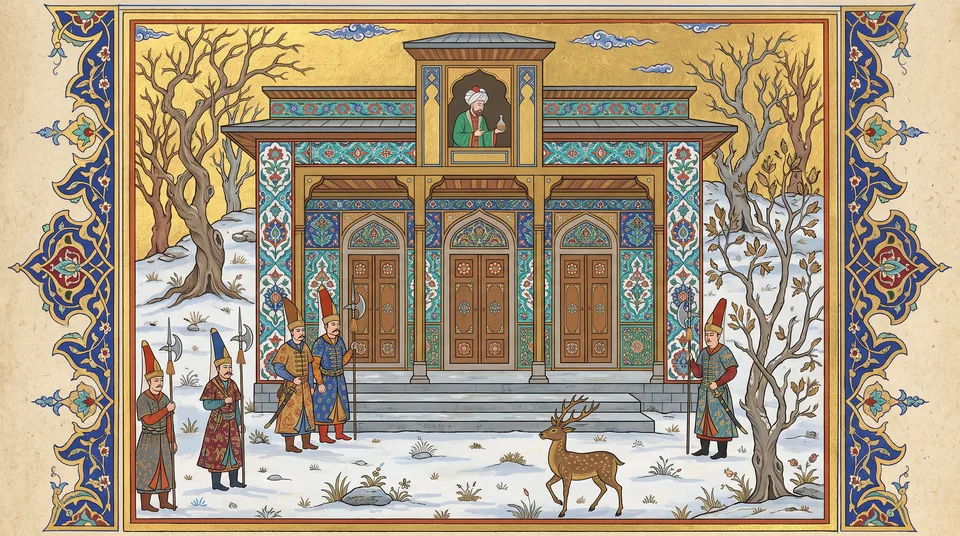
Edirne Lodge
fortressThe Edirne Lodge, once a secluded hunting retreat, now bears the weight of a monumental secret. The air is thick with the knowledge that the Sultan's true condition may soon be known to the world, shattering the long-held facade.

Bartolomeo Zen
Secretary to the Venetian bailo; head of the House of Galata
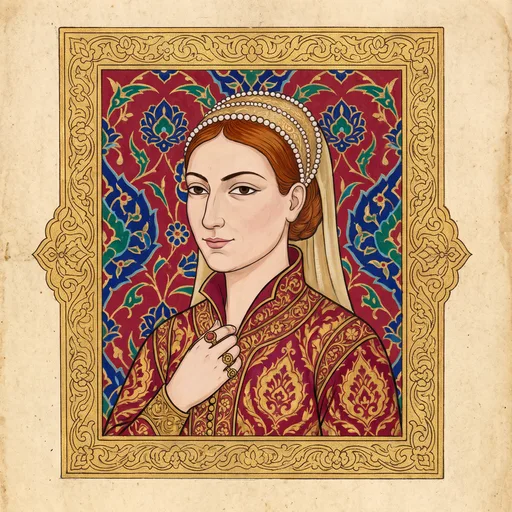
Dilruba Hatun
Mother of Prince Yahya; lady of the Old Palace
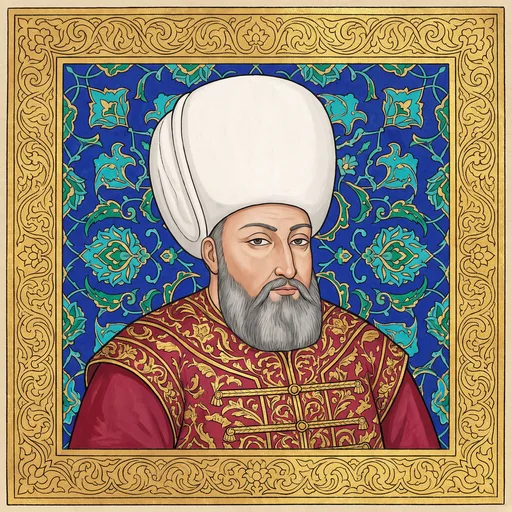
Ferhad Pasha
Grand Vizier of the Divan (Sadrazam); head of the House of the Divan
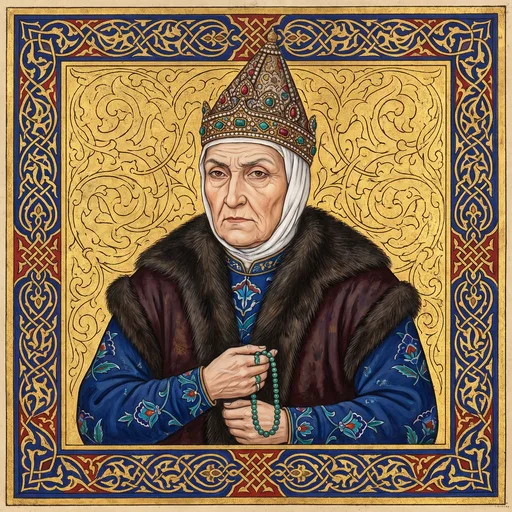
Gevher Sultan
The Valide, queen mother; head of the House of the Inner Court
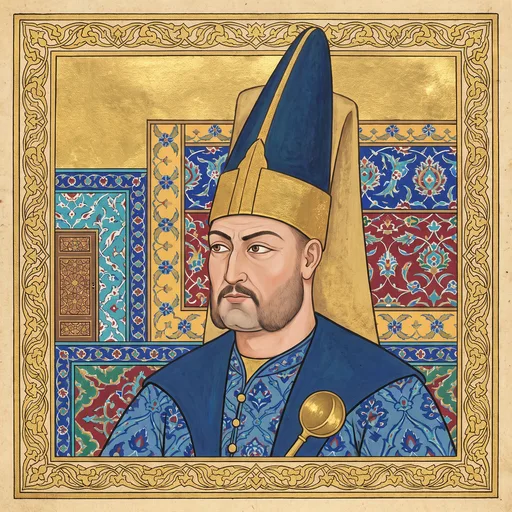
Hasan Corbaci
Commander of the 61st orta; signs the pay-rolls

Kasim Bey
Lala (tutor-vizier) of Prince Korkut; steward of the Manisa household
- *THE HOUSE OF ASLANOGLU: this is a FICTIONAL dynasty on real ground — Sultan Alaeddin Aslanoglu, the Old Lion; his mother Gevher Sultan, the Valide; his sons Prince Korkut (Manisa), Prince Yahya (Kutahya), Prince Cihan (Trabzon). No real historical sultan, consort, vizier or admiral exists in this world or is ever named.
- *THE SULTAN IS ABSENT: the Old Lion has been at the Edirne hunting lodge for fourteen months and is never seen on the page. Firmans arrive with his tugra; the Divan obeys them. What has become of him is the empire's true question and is revealed only as proof a player has earned — never as narration.
- *THE DEFTER: every core NPC keeps a written register of who served and who wronged them. The register is server truth: it records players — INCLUDING OTHER PLAYERS — and the NPC acts on it. A grudge is remembered until it is paid; a favor is remembered until it is spent; an oath is remembered forever.
- *THE GATE (RANK): standing at court runs Petitioner → Sworn of the Gate → Confidant → Voice of the Divan → Keeper of the Seal → Vizier of the Dome → the final seat. Rank rises ONLY on completed intrigues that left evidence on the page (a seal, a signature, a witness, a confession, a letter) and on favors from the powerful — never on talk alone. A promotion is STAGED once, as a robe of honor, and printed THE GATE: <rank>.
- *SEALS OF THE HOUSES: seven houses — the Divan, the Inner Court, the Ocak, Manisa, Kutahya, Trabzon, Galata. A house seals to a player its head has recorded twice in favor. A seal given is never taken back; a grudge from a sealed house is a BETRAYAL, recorded and remembered by every house.
- *THE CORD: the palace keeps a silk bowstring for those who climb too loudly. Bold intrigue (bribes, forgery, blackmail, poison, denunciation) raises suspicion; discretion, gifts, humility and favors lower it. At the limit the Bostancibasi's mutes come — the Seven Towers if a house will vouch, the bowstring if none will. The number is server truth and is shown to the player.
- *THE LAW OF THE CORD: on accession the new sultan's brothers are strangled with a silk bowstring. Every prince knows the arithmetic; every mother of a prince hears the drums in her sleep. Succession is zero-sum and the losers do not retire.
- *THE ULUFE: the janissary pay is three months late because the Treasury releases nothing without the Sultan's own quarterly warrant. Gold has moved quietly from the Egypt tribute to keep the cauldrons on their hooks. When the cauldrons turn over, sultans fall.
- *LETTERS ARE THE WEAPONS: this court fights with letters, seals, witnesses, oaths and gossip — not with swords. Reading a letter never consumes it. A letter shown, copied, sold or intercepted changes hands ON THE PAGE or not at all.
- *NEUTRAL GROUND: the Bedesten and the shrine at Eyup are neutral by long custom — blades stay sheathed, oaths sworn there bind every house, and Kirkor Usta's prices are the same for everyone. Konya's dervish lodge is the one court in Anatolia no house owns.
- *TITLES ARE NAMES: Sehzade (prince of the blood), Pasha (minister), Aga (commander), Valide (queen mother), Hatun / Kadin (lady, consort), Efendi (learned sir), Bey (lord), Celebi (gentleman), Kethuda (steward), Corbaci (regiment commander), Usta (master craftsman). Prose is English-first; Turkish titles are used as names with a one-word English gloss on first use in a scene.
- *THE ROAD READS: every letter that travels the Anatolian Road or crosses at Uskudar is seen — by a station-master, a ferryman, a Divan clerk copying names. Movement between courts is itself information.
- *NPCs HAVE THEIR OWN INTERESTS: no pasha, prince or hatun obeys a player. They act on rank, house, fear, the Defter and what they saw on the page — a player who asks for more than their standing allows is refused in character, and the refusal is a scene.
- *OTHER COURTIERS: other player characters exist across the court. Their deeds persist in the defters and as gossip; NPCs repeat them by name. Nothing done is undone.