有世界而非空白框的 AI Dungeon 替代品

厌倦了 AI 忘记你两幕前的故事,还有一个没有世界支撑的空白提示框?

Mythora 为你提供拥有自身传说、势力与记得你所作所为的角色的精选活世界。既有真实世界的结构,又有开放选择的自由。

免费畅玩免费开始 — 无需银行卡。

Most people searching for an AI Dungeon alternative hit the same wall: the AI forgets the story two scenes back, and the blank prompt gives you nothing to push against. Total freedom sounds great until there's no world to make your choices mean anything.

Mythora keeps the open-input freedom but puts a real world underneath it. Each world has its own lore, factions, and characters who track what you've done, so the story compounds instead of resetting every few turns.

You're not improvising into a void — you're playing inside a place with stakes, where a choice in chapter one can come back to find you in chapter ten.

项目MythoraAI Dungeon
长期记忆NPC 跨会话记得你长冒险中记忆会淡化
精选世界跨类型的精心打造活世界自由即兴,无精选世界
有意义的选择每个选择都重塑活世界开放文本输入,无固定结构
免费开始是 — 每日免费种子免费 + 点数 / 订阅
世界不会消失持续存在的原创世界 — 不会一夜消失你的单人故事,但无活世界

Structure and freedom, not one or the other

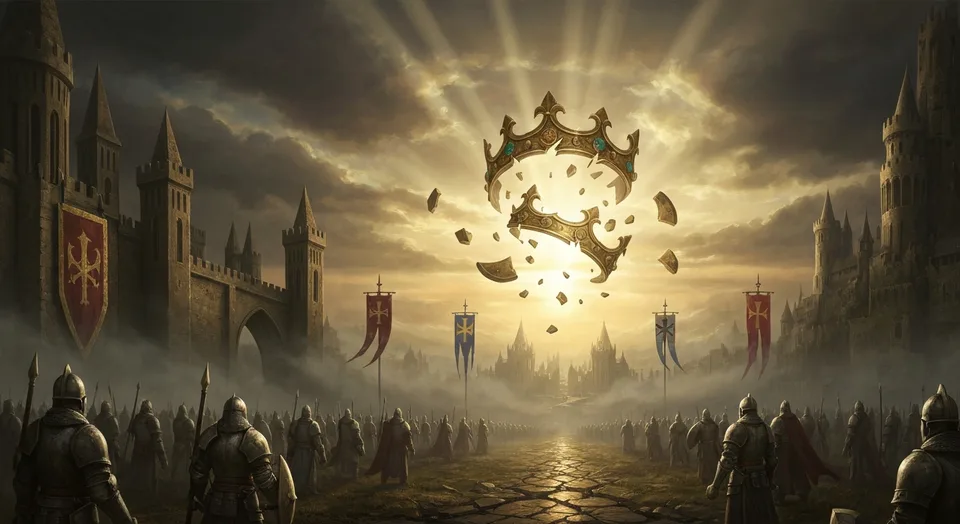
In Age of the Devourer players don't just type into an empty box — they push against a living world with its own gods, factions, and consequences, and the world pushes back. Your actions ripple outward and persist, so the world you leave behind is shaped by the one you played.

The blank-box problem

Freeform improv engines start you with nothing on purpose — that's the product. But an empty prompt puts the entire burden of invention on you, and it quietly puts the burden of *consistency* there too. You're not only deciding what your character does, you're the only one keeping track of what the world is.

Most people don't notice this in the first hour, because inventing is fun. They notice it around hour five, when the narrator contradicts something they established, and they realise there was never anything underneath holding it. The freedom was real; the ground wasn't.

A curated world inverts that. The lore, the factions, the map, and the people already exist and are already consistent with each other, so your choices push against something. You keep the open free-text input — you can still type anything — but you're no longer the only author of reality.

How memory is actually stored

Scenario editors and world-info entries are the standard patch for AI forgetting: you write down the facts you want remembered, and they get injected into the prompt when a keyword matches. It works, and it's entirely manual — every fact that matters is a fact you noticed and typed.

Mythora treats memory as something the game does rather than something you file. What you do changes the world and the people in it, and the narrator brings forward what matters to where you are, who's with you, and what just happened. In practice that means it keeps track of your current location, characters present, and recent history. Nobody has to tag anything, and the model isn't asked to hold twenty hours of prose in its head at once.

The practical difference shows up when you *don't* prepare. If you improvise something in chapter one and forget about it, a world-info system forgets it too, because you never wrote it down. A world that keeps its own record kept it, because it was something that happened, not something you filed.

Shared worlds change what persistence means

Solo persistence means your story survives between your sessions. Shared persistence means it survives between *people*. In Mythora, multiple real players inhabit the same world, so a faction someone else weakened is weaker when you arrive, and a place you burned is one another player can walk into.

This is the part that has no equivalent in a solo improv engine, and it's a genuine trade-off rather than a pure upgrade: you're accepting that you don't have unilateral authorial control over the setting. Some players want exactly that control. For the rest, it's the difference between a story you told and a place that exists.

Don't switch if…

If what you love about AI Dungeon is that there is *nothing* there until you invent it — no genre, no setting, no established facts, no other players' fingerprints — then stay with AI Dungeon, and don't let anyone talk you out of it. A curated persistent world is structurally the opposite of a blank canvas. Mythora is the right move only if your complaint is that the story keeps forgetting itself and that your choices don't seem to land anywhere.

现在就能玩的世界

AI Dungeon alternative — FAQ

What's a good AI Dungeon alternative that remembers the story?

Mythora. It pairs open choices with a layered memory system, so characters and events carry forward instead of fading after a few scenes.

Does Mythora's AI forget what happened earlier?

Memory is a core system, not an afterthought. Your history is compressed and kept, so the world references past events later instead of dropping them.

Is Mythora free like AI Dungeon?

Yes — free to start with daily seeds, no card required. Subscriptions are optional for more daily actions.

Is Mythora just a blank prompt?

No. Instead of a blank improv box, you choose a curated world with its own lore, factions, and characters, then play inside it.

Can I still make my own choices?

Yes. You get open-ended choices and free input — the difference is that a real world reacts to and remembers them.

Do I have to write my own world info or scenario entries?

No. World-info and scenario editors are manual — you write down the facts you want the AI to remember. In Mythora the world records what you did as you play, so things you never thought to note down are still kept.

Can I create my own world in Mythora?

Yes. Alongside the curated official worlds you can create your own world from a seed, and it runs on the same persistence, memory, and simulation systems.

Is Mythora multiplayer like AI Dungeon's co-op?

It's a different shape. AI Dungeon co-op is a shared scenario with invited players; Mythora worlds are persistently shared, so other players are acting in the same world on their own schedule and you encounter the traces they leave.